Spiritual Exercises
The Spiritual Exercises of St. Ignatius of Loyola
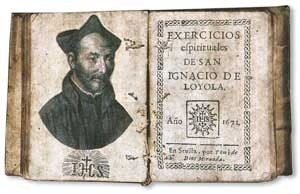
After his profound conversion of heart and mind, Ignatius journeyed to a place called Manresa, where he lived for nearly eleven months in a cave near a monastery. There, through long hours of prayer, meditation, and interior struggle, he recorded in his journals the experiences of God’s action within him—experiences that would shape the course of his life and mission. These reflections gradually took form as the Spiritual Exercises, first published in 1548. They remain one of the most enduring contributions of Ignatius to the Church and continue to guide countless people in their search for God.
What Are the Spiritual Exercises?
The Spiritual Exercises are a carefully ordered collection of prayers, meditations, contemplative practices, and discernment tools. They are not meant to be read like a book from beginning to end, but rather used as a practical guide, especially with the accompaniment of a trained spiritual director.
Their purpose is to help individuals grow in interior freedom, attentiveness, and responsiveness to God—so that they may discern God’s will more clearly and respond generously in daily life. At their heart, the Exercises embody the core of Ignatian spirituality: a deep desire to know Christ more intimately, love Him more deeply, and follow Him more faithfully.
The Four Movements of the Exercises
The Spiritual Exercises are traditionally structured into four stages or “weeks”, each representing a distinct spiritual movement:
First Week
A time of honest self-reflection in the light of God’s boundless love. Participants become aware of personal limitations and patterns that hinder freedom, trusting in God’s mercy and desire to heal and restore.
Second Week
A period focused on following Christ more closely. Through contemplation of Christ’s life—His birth, ministry, teachings, and healing—participants are invited to make concrete choices that align their lives with His mission.
Third Week
A deep meditation on Christ’s Passion, suffering, and death. This stage invites participants to remain with Christ in His self-giving love, recognizing the depth of God’s love revealed through the Cross and the gift of the Eucharist.
Fourth Week
A celebration of Christ’s Resurrection and new life. Participants are called to walk with the risen Lord and to carry His love into the world through joyful service and commitment.
Ways of Making the Exercises
Jesuits traditionally undertake the Exercises as a 30-day retreat, often called The Long Retreat, in a setting of silence and prayer with the guidance of a spiritual director. However, the Exercises are also widely practiced in other forms.
One popular adaptation is the Spiritual Exercises in Everyday Life, which allows individuals to engage in the Exercises over several months while continuing their daily responsibilities. This approach typically involves daily prayer and regular accompaniment, making the Ignatian path accessible to lay persons, students, professionals, and families.
The Exercises and the Mission of JPS
For the Jesuit Province Society (JPS), the Spiritual Exercises are not only a spiritual practice but the foundation of our way of proceeding. They shape our approach to leadership, service, discernment, and mission—helping us respond faithfully to God’s call in the realities of Andhra Pradesh and Telangana.
Rooted in prayer and discernment, the Exercises continue to form individuals and communities committed to faith that seeks justice and service that flows from love.